Puppy Biting: How Long the Phase Lasts and How to Stop It Kindly
Nobody warns you how sharp puppy teeth are. Hands, ankles, trouser legs, the lead: if it moves, it gets bitten. Puppy biting is normal, but that doesn’t mean you have to put up with it. Here’s why it happens, roughly how long it lasts, and a kind plan that helps.
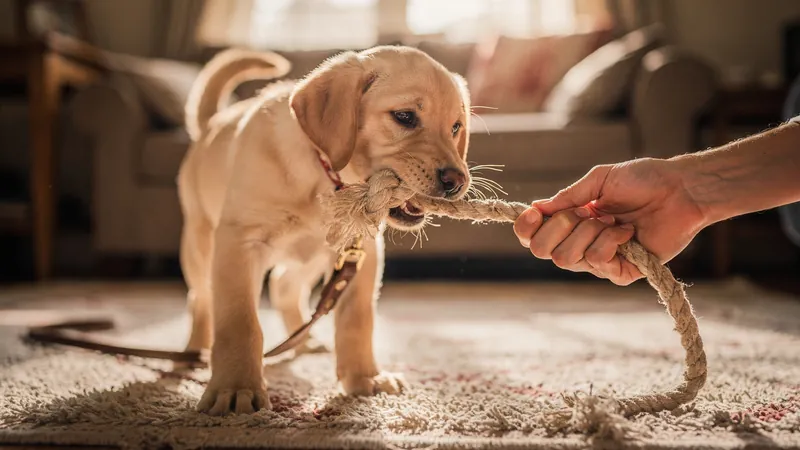
Why puppies bite
- Exploring. Puppies investigate the world with their mouths, much like babies do.
- Play. Puppies play-fight with their littermates using their teeth. Your hands are the nearest substitute.
- Teething. Puppies lose their baby teeth and grow adult teeth over the first months of life, and chewing can feel good.
- Tiredness. Overtired puppies get bitey, a bit like toddlers having a meltdown.
- Attention. If biting gets a big reaction, it can quickly become a game.
Dogs Trust describes puppy mouthing as “extremely common and a normal part of development”, while stressing that puppies still need help learning to be gentle with people (Dogs Trust).
How long does the puppy biting phase last?
The honest answer is: it varies. Teething usually finishes once adult teeth are through, typically around six to seven months of age. But mouthing isn’t only about teething. It’s also about play, excitement and tiredness, so how quickly it fades depends a lot on what your puppy learns in the meantime.
With consistent redirection and plenty of rest, many owners see a real improvement over a few months. If biting is getting worse rather than better, see “When to get help” below.
The plan: prevent, redirect, pause
1. Prevent: set your puppy up to succeed
- Sleep. Puppies need a lot of sleep. Build in regular naps in a quiet pen or crate that your puppy is happy to use.
- Watch for the build-up. Bouncing, pouncing and batting at things often come before biting. That’s your cue to offer a toy before the teeth arrive.
- Have toys everywhere. Keep a tug toy or soft toy in each room and in your pocket so you can redirect instantly.
- Calm activities after excitement. After play or visitors, offer a chew, a licking mat or a scatter of treats in the grass. Sniffing, licking and chewing help puppies settle.
- Avoid rough hand games. Wrestling with hands teaches your puppy that hands are toys.
2. Redirect: show them what they can bite
- When your puppy starts mouthing, keep your hand still (pulling away fast makes it more exciting).
- Offer a toy, moving it along the floor like prey.
- Praise and play when they grab the toy. Let them win sometimes.
- Swap toys every few days to keep them interesting.
3. Pause: make biting end the fun
If teeth keep landing on skin:
- Stop, go still and fold your arms.
- If biting continues, calmly step away or step behind a baby gate for a few seconds.
- Come back with a toy and start again calmly.
Dogs Trust recommends this approach too: stay still, turn away, step away if needed, and don’t tell your puppy off (Dogs Trust).
Common biting situations
Biting hands when you stroke them
Keep strokes short and calm, especially when your puppy is excited. Stroke the chest rather than the head, and have a chew ready to offer.
Biting feet and ankles
Moving feet look like prey. Stop walking, stand still and toss a toy away from your feet. Wear thicker socks or wellies for a few weeks if it helps you stay calm.
Biting the lead
Clip on the lead, then feed a few treats while it hangs loose. If your puppy grabs it, stop moving and swap the lead for a tug toy. Redirection is what solves it, not a special lead.
Biting clothes
Don’t pull clothes away; it makes a brilliant tug game. Go still, then redirect to a toy. Take off a dressing gown or loose coat if it’s the target.
Biting children
Children’s movements and squeals can make biting worse. Supervise always, use gates, and see puppy jumping up at children for jobs children can safely help with.
What not to do
- Don’t tap their nose, hold their mouth shut or “scruff” them. It can frighten and hurt your puppy and make biting worse.
- Don’t shout or tell them off. Dogs Trust warns that raised voices can increase frustration and fear.
- Don’t pull your hands away fast. It turns biting into a chase game.
- Don’t let biting work sometimes. Consistency across the whole family really matters.
When to get help
Speak to your vet and a qualified behaviourist (ABTC register) if:
- biting is getting worse, not better, as your puppy gets older
- biting comes with growling, stiffness or seems fearful rather than playful
- your puppy guards food, toys or places
- someone in the family is being hurt or is frightened of the puppy
Quick recap
- Puppy biting is normal: exploring, play, teething and tiredness.
- Teething usually finishes around six to seven months, but mouthing fades with learning, not just time.
- Prevent with sleep and toys, redirect to toys, and pause the fun if teeth land on skin.
- No punishment, no fast-moving hands, and lots of consistency.
More help in our puppy hub, and when you start lead walking, see how to stop your dog pulling on the lead.
Frequently asked questions
How long does the puppy biting phase last?
There's no exact date. Teething usually finishes when adult teeth are through, typically around six to seven months, but mouthing is also about play and learning. With consistent redirection, many owners find biting gets much better over a few months. If it isn't improving, or seems worried or aggressive, get help.
Should I yelp when my puppy bites?
Some puppies calm down when you yelp, but many get more excited. A more reliable approach is to stop, keep still, and redirect to a toy, or calmly step away for a moment if biting carries on.
Why does my puppy bite more in the evening?
Many puppies have a 'witching hour' when they're overtired or overstimulated. Plan a calm activity like a chew or sniffing game before that time, and make sure your puppy is getting enough sleep.
Is it OK to hold my puppy's mouth shut or tap their nose?
No. Physical punishment can frighten your puppy, damage your relationship and make biting worse. Dogs Trust advises against punishing mouthing for exactly this reason.
Free printable: the 7-day calm-walk tracker
A one-page daily checklist to stick on the fridge. Tick off short practice sessions, note what worked, and see progress at a glance. Free, with occasional emails of practical tips. Unsubscribe any time.
Loose Lead in 21 Days
Does your dog pull on the lead too? Our first Fix Plan tackles that.
Everything in our free pulling guide, turned into a day-by-day plan: 21 short sessions with clear “move on when…” checks, printable session cards, a 21-day tracker and troubleshooting for the most common sticking points.
£17 PDF download · 60-day refund, no questions asked
Keep reading
How to Walk a Big, Strong Dog That Pulls (Kindly and Safely)
Being pulled over by a large dog is frightening. Practical, force-free ways to stay safe and in control today, the right kit for big dogs, and how to teach loose-lead walking.
RecallMy Dog Ignores Recall: 9 Reasons and Kind Fixes
Your dog comes back at home but not at the park? Or they've suddenly started ignoring you? Nine common reasons recall breaks down, and what to do about each one.
PullingWhy Your Dog Pulls When Excited (and the 'Be a Tree' Fix)
Does your dog drag you out of the door, towards the park or at the sight of another dog? Why excitement causes pulling, and a calm, step-by-step 'be a tree' routine that helps.