How to Walk a Big, Strong Dog That Pulls (Kindly and Safely)
When a 35 kg dog decides to go somewhere, you go too. Many owners of big dogs quietly dread walks: sore shoulders, near-misses on icy pavements, or the fear of being pulled over by a dog that’s simply excited. This guide covers how to stay safe now and how to teach your dog to walk with you using kind methods that work just as well for big dogs as small ones.
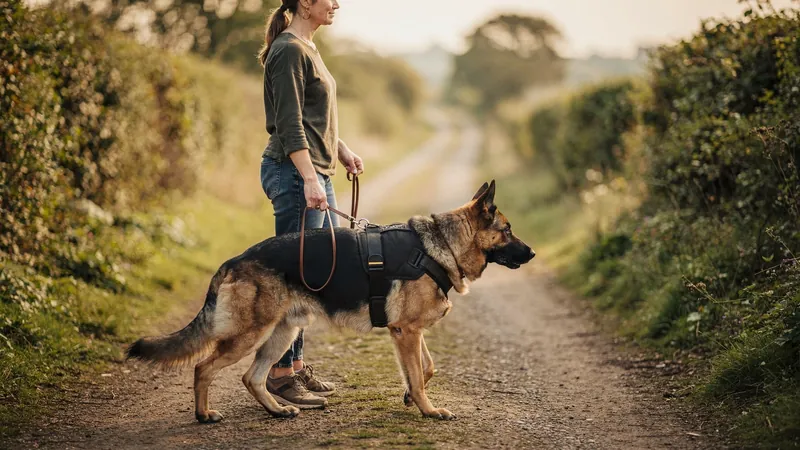
First: stay safe while you train
Training takes weeks. In the meantime, your safety (and your dog’s) comes first.
- Use a harness with two clip points. A front clip on the chest gives you steering: when your dog pulls, they tend to turn slightly towards you rather than powering forwards. A back clip is comfortable for relaxed moments. A double-ended lead clipped to both gives you the most control.
- Hold the lead well. Put your thumb through the handle loop, close your hand, and hold a fold of lead with your other hand. Never wrap the lead round your wrist or fingers: if your dog lunges, it can injure you.
- Stand side-on if your dog pulls hard. Turn your body sideways with your knees soft. You’re far more stable side-on than facing forwards.
- Pick your routes and times. Quiet streets, early mornings and wide paths make life easier. Avoid narrow pavements by busy roads until your dog’s walking improves. The Highway Code asks you to keep your dog on a short lead on the pavement next to a road. That’s hard with a big puller, which is one more reason to choose quiet routes for now.
- Wear good shoes. Grippy soles matter, especially on wet leaves and ice.
Kit for big dogs: what helps and what to avoid
Helpful
- A padded, Y-fronted harness with broad straps, front and back clips and enough adjustment for a snug fit. Check it doesn’t sit across the point of the shoulders. See harness, head collar or collar?
- A double-ended training lead about 2 metres long, which can clip to both points.
- A treat pouch so rewards are quick to reach.
Use with care
- Head collars can help some very strong dogs, but they need a slow, treat-filled introduction and a gentle hand. Never jerk a head collar, and use a longer lead so there’s no sudden tension on the head.
Avoid
- Choke chains, slip leads used as chokes, prong collars and electronic collars. These work by causing discomfort or pain. They can harm your dog physically and emotionally, and they don’t teach your dog what you’d like them to do instead.
- Retractable leads while you’re working on pulling. They keep constant tension on the lead and can snap or burn hands with a strong dog.
Teach your dog where to walk
Big dogs learn exactly the same way as small ones: they repeat what gets rewarded. The plan below is the same one we use for all dogs, with a few big-dog tweaks.
1. Start indoors and in the garden
Practise walking around your kitchen or garden on the lead. Every time your dog is beside you, say “yes” and drop a treat by your leg. With a big dog, you might bend less if you deliver the treat at your hip and let them take it there.
2. Teach a “check-in”
Reward your dog every time they glance up at you on a walk. A dog who checks in with you is much easier to walk than one who’s locked on to the horizon.
3. Be a tree, or turn and go
When the lead goes tight, stop. Walk on when it’s loose. If your dog is happy to lean into the harness for ages, calmly turn and walk the other way, and reward them when they catch up. We explain this in detail in why your dog pulls when excited.
4. Make sniffing part of the deal
Big, powerful dogs often pull hardest because they’re desperate to sniff. Say “go sniff” after a few good steps and let them explore on a loose lead. It’s a reward that costs nothing.
5. Build up distractions slowly
Practise on quiet streets first, then gradually add busier places, other dogs at a distance and so on. If your dog can’t take a treat, you’re too close or it’s too busy. Step back and make it easier.
Big-dog troubleshooting
- They lunge at cats, squirrels or birds. Scan ahead so you see them first. Turn away early, and practise a “let’s go” cue (say it, turn and reward) in easy places before you need it.
- They’re fine until they see another dog. Increase distance, cross the road or step behind a parked car. If they bark or lunge, see our barking and reactivity guide.
- They’re a teenager. Many dogs go through an adolescent phase when training seems to fall apart. Keep sessions short, keep rewards high and don’t give up.
- They seem uncomfortable or stiff. Big breeds can be prone to joint problems. If your dog’s walking changes, they seem sore, or pulling starts suddenly, see your vet. Pain can affect behaviour.
When to get help
If you feel unsafe walking your dog, you’re not failing. Get help early from a qualified trainer or behaviourist who uses reward-based methods. The Animal Behaviour and Training Council (ABTC) keeps UK registers of practitioners who meet set standards.
Next steps
- Start with the free guide: how to stop your dog pulling on the lead.
- Want a structured plan? Loose Lead in 21 Days includes a troubleshooting section for big, strong dogs.
Quick recap
- Safety first: two-clip harness, good lead grip, side-on stance, quiet routes.
- Avoid pain-based kit and retractable leads.
- Teach loose-lead walking the same way as for any dog: reward the sweet spot, stop or turn when the lead goes tight, and build up slowly.
Frequently asked questions
What's the best harness for a large dog that pulls?
Look for a padded, Y-fronted harness with both a front and a back clip, broad straps, and plenty of adjustment so it fits snugly without restricting the shoulders. A double-ended training lead clipped to both points gives you more steering. Fit matters more than the brand.
Is a head collar OK for a big dog?
Some owners find a well-fitted head collar helpful for a very strong dog, but it must be introduced slowly with treats so your dog is comfortable wearing it, and used with a gentle hand and a longer lead. Never jerk a head collar. Many dogs find them unpleasant at first, so give it time or choose a harness instead.
Can a child or an older relative walk my big dog?
Only once the dog walks reliably on a loose lead and the walker is physically able to hold them if something unexpected happens. Dogs Trust advises never letting a child hold the lead, as even small dogs can pull them over when excited.
My big dog lunges at other dogs. What should I do?
For safety, keep your distance, use a well-fitted harness with two clip points and choose quieter routes. Lunging is often about worry or frustration, so speak to your vet and a qualified behaviourist. The ABTC keeps UK registers.
Free printable: the 7-day calm-walk tracker
A one-page daily checklist to stick on the fridge. Tick off short practice sessions, note what worked, and see progress at a glance. Free, with occasional emails of practical tips. Unsubscribe any time.
Loose Lead in 21 Days
Everything in our free pulling guide, turned into a day-by-day plan: 21 short sessions with clear “move on when…” checks, printable session cards, a 21-day tracker and troubleshooting for the most common sticking points.
£17 PDF download · 60-day refund, no questions asked
Keep reading
My Dog Ignores Recall: 9 Reasons and Kind Fixes
Your dog comes back at home but not at the park? Or they've suddenly started ignoring you? Nine common reasons recall breaks down, and what to do about each one.
PullingWhy Your Dog Pulls When Excited (and the 'Be a Tree' Fix)
Does your dog drag you out of the door, towards the park or at the sight of another dog? Why excitement causes pulling, and a calm, step-by-step 'be a tree' routine that helps.
PullingDog Pulling on the Lead and Choking or Coughing: What to Do Today
If your dog coughs, gags or wheezes when they pull, here's why it happens, what to change on today's walk and when to see your vet. Kind, practical UK advice.