Why Your Dog Pulls When Excited (and the 'Be a Tree' Fix)
Some dogs walk fairly nicely on a quiet street, then turn into a sledge dog the moment they see the park gates, smell a fox or spot a friend. If that sounds familiar, the problem usually isn’t that your dog doesn’t know how to walk on a loose lead. It’s that excitement makes thinking hard.
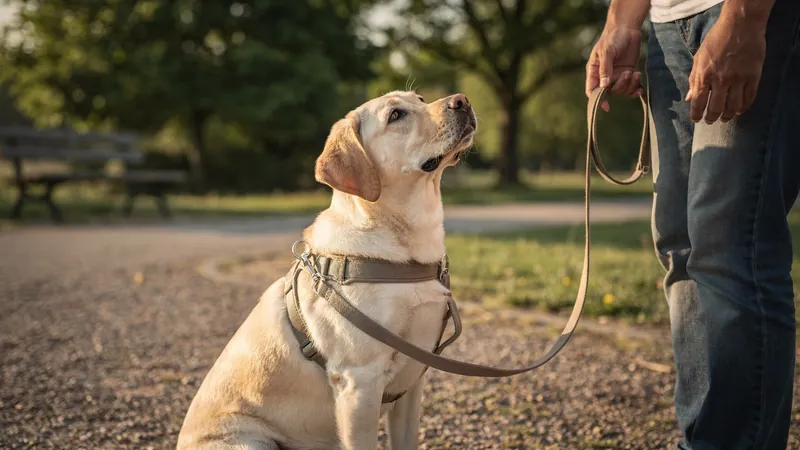
Why excitement causes pulling
- Pulling works. Every time pulling gets your dog to the park, the smell or the dog faster, pulling is rewarded. The more exciting the thing, the bigger the reward.
- Excited brains can’t focus. When a dog is very aroused, it’s harder for them to notice you, take treats or remember what they’ve learned. That’s normal, not stubbornness.
- Walks start at the peak. Many dogs are already wound up before they leave the house: the lead comes out, they spin and bark, and they hit the pavement at full speed.
- They don’t get enough sniffing. Sniffing is a huge part of what a walk means to a dog. If they rarely get to do it, they’ll grab every chance.
So the plan has two parts: lower the excitement where you can, and make sure pulling never pays while a loose lead always does.
The “be a tree” routine
The idea is simple: when the lead goes tight, you stop. When it’s loose, you move. Your dog learns that a loose lead is what makes the walk happen.
- Hold the lead with a relaxed arm, hand close to your waist. A 1.5 to 2 metre lead is ideal.
- Walk on while the lead is loose. Chat to your dog, reward them for being near you.
- The moment the lead goes tight, stop. Stand still and quiet, like a tree. Don’t pull back, don’t repeat cues, don’t jerk the lead.
- Wait for any slack. Your dog might look back, step back or just ease off. The instant the lead goes slack, say “yes” and walk on. You can also drop a treat by your leg.
- Repeat, every time. Consistency is everything. If pulling sometimes works, your dog will keep trying it.
Tip: at first you might only get a few steps between stops. That’s fine. Do this on short training walks somewhere quiet, not when you’re in a hurry.
When standing still isn’t enough: turn and go
Some excited dogs will happily stand at the end of a tight lead for minutes. If that’s your dog, calmly say “this way”, turn round and walk in the other direction. When your dog catches up and is beside you, reward them. Then turn back towards the exciting thing and try again. Turns should be gentle and friendly, never a jerk on the lead.
Lower the excitement before you even leave
Calm starts at the door
- Pick up the lead. If your dog spins, barks or jumps, put it down and sit back down for a minute.
- Try again. When your dog is calmer, clip the lead on.
- Walk to the door. If your dog charges ahead, stop. Open the door a little; if they rush, gently close it again.
- Step out when the lead is slack. You may find this takes several attempts the first few times. It gets quicker.
Let them sniff early
A few minutes of sniffing at the start of a walk can take the edge off. Try a “sniff zone”: walk to a quiet verge, say “go sniff” and let your dog explore on a loose lead. Then carry on with some loose-lead practice.
Use sniffing as the reward
After a few steps of nice walking, say “go sniff” and let your dog visit the lamppost they were desperate to reach. Sniffing on a loose lead becomes the reward for walking on a loose lead.
Working near exciting things
Most dogs pull hardest towards the park, other dogs or squirrels. Build up slowly.
- Add distance. If your dog can’t take a treat or look at you, you’re too close. Move further away, practise there, and get gradually closer over several sessions.
- Approach in arcs, not straight lines. Walking straight at something exciting builds anticipation. A curved approach is easier for your dog.
- Pay well. Use your best treats near the most exciting things. Your dog is working hard.
- Make arrival the reward. At the park gate, wait for a loose lead, then go in. The park itself is the prize.
What not to do
- Don’t jerk the lead or use pain or pressure to stop pulling. It can hurt your dog, can make them more worried and excited around triggers, and doesn’t teach them what to do instead.
- Don’t let pulling pay “just this once”. Every successful pull makes the next one more likely.
- Don’t expect too much in hard places. If your busy local park is the hardest place on earth for your dog, practise somewhere easier first.
Excited or worried?
Pulling towards other dogs isn’t always friendly excitement. If your dog barks, lunges, growls, stiffens or fixates, they may be frustrated or worried. Read our barking and reactivity guide and consider a qualified behaviourist (ABTC register). If your dog’s behaviour changes suddenly, see your vet first, as pain can play a part.
Next steps
- New to loose-lead walking? Start with how to stop your dog pulling on the lead.
- Coughing or choking when they pull? Read what to do today.
- Want a day-by-day plan? Loose Lead in 21 Days builds from your kitchen to busy streets, including sessions on exciting places and other dogs.
Quick recap
- Excitement makes thinking hard, and pulling gets rewarded when it works.
- Be a tree: stop when the lead goes tight, move when it’s loose. Turn away if standing still isn’t enough.
- Calm starts, early sniffing and distance from triggers make it much easier for your dog.
Frequently asked questions
Why does my dog pull more at the start of a walk?
The first few minutes are usually the most exciting part of the walk: new smells, built-up energy and the anticipation of getting out. Calm starts at the door, a quiet first stretch and a few minutes of sniffing early on all help.
How long does 'be a tree' take to work?
It varies a lot from dog to dog. It can feel slow at first, but many dogs start to notice the pattern when you are completely consistent. Short, frequent practice in quiet places helps much more than long walks somewhere busy.
Should I turn and walk the other way instead of stopping?
Yes, that's a useful alternative for dogs who just stand and pull. Calmly turn round and walk the other way, reward your dog when they catch up beside you, then turn back. Do it gently, without jerking the lead.
My dog pulls towards other dogs. Is that the same thing?
If your dog is friendly and just desperate to say hello, the same principles apply, plus more distance. If they bark, lunge or growl, that's often worry or frustration rather than excitement. See our barking and reactivity guide and consider a qualified behaviourist.
Free printable: the 7-day calm-walk tracker
A one-page daily checklist to stick on the fridge. Tick off short practice sessions, note what worked, and see progress at a glance. Free, with occasional emails of practical tips. Unsubscribe any time.
Loose Lead in 21 Days
Everything in our free pulling guide, turned into a day-by-day plan: 21 short sessions with clear “move on when…” checks, printable session cards, a 21-day tracker and troubleshooting for the most common sticking points.
£17 PDF download · 60-day refund, no questions asked
Keep reading
How to Walk a Big, Strong Dog That Pulls (Kindly and Safely)
Being pulled over by a large dog is frightening. Practical, force-free ways to stay safe and in control today, the right kit for big dogs, and how to teach loose-lead walking.
RecallMy Dog Ignores Recall: 9 Reasons and Kind Fixes
Your dog comes back at home but not at the park? Or they've suddenly started ignoring you? Nine common reasons recall breaks down, and what to do about each one.
PullingDog Pulling on the Lead and Choking or Coughing: What to Do Today
If your dog coughs, gags or wheezes when they pull, here's why it happens, what to change on today's walk and when to see your vet. Kind, practical UK advice.